

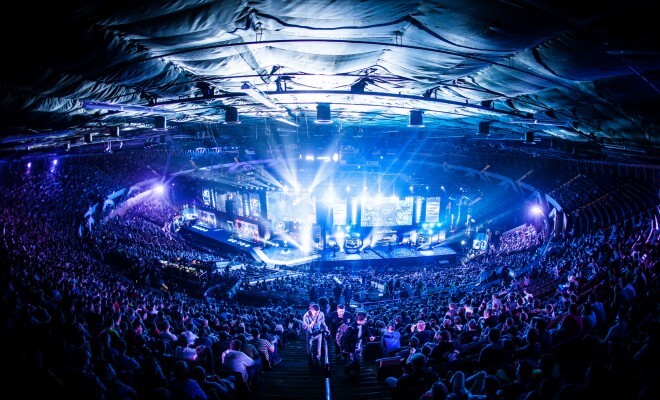
CFP: eSports and professional game play III The purpose of this third special issue is to explore, discover and share insights and research in eSports. Authors are invited to submit manuscripts that Examine the emergence of eSports The uses of streaming technology Traditions of games that support professional players– chess, go, bridge, poker, league of legends, Dota 2, Starcraft Fan perspectives Professional player perspectives Market analysis Meta-analyses of existing research on eSports Answer specific questions such as: How should game user research examine the emergence of eSports? Should we differentiate pragmatic and hedonic aspects of the game? Case studies, worked examples, empirical and phenomenological, application of psychological and humanist approaches? Field research Face to ...
CFP Special Issue On: SURGE, Physics Games, and the Role of Design
CFP Special Issue On: SURGE, Physics Games, and the Role of Design Submission Due Date 5/15/2017 Guest Editors Douglas Clark, Vanderbilt University, Nashville, TN, USA Introduction The purpose of this special issue is to investigate the role of design in the efficacy of physics games in terms of what is learned, by whom, and how. Importantly, studies should move beyond basic media comparisons (e.g., game versus non-game) to instead focus on the role of design and specifics about players’ learning processes. Thus, invoking the terminology proposed by Richard Mayer (2011), the focus should be on value-added and cognitive consequences approaches rather than media comparison approaches. Note ...
CFP: Gaming, gender, and the female perspective
CFP: Gaming, gender, and the female perspective The purpose of this special issue is to investigate and explore female roles, participation, and representation in video games and the video games industry. Authors are invited to submit manuscripts that Examine the emergence and after effects of gamer gate Traditions of games that support professional female players Female fan perspectives Representation of women in games Market analysis Meta-analyses of existing research on women in games Female experiences of scholarship and industry Answer specific questions such as: How should feminist theory inform game user research? What are the methodologies for conducting feminist games research, and the uses and design of games for gender issues? Case studies, ...

Gamification Transformed: Gamification Should Deliver the Best Parts of Game Experiences, Not Just Experiences of Game Parts
Brock Dubbels Ph.D. Dept. Psychology, Neuroscience, and Behaviour McMaster University Abstract Gamification may provide new venues for offering customer experiences. The chapter compares three models of game play analyzed through user experience research. In section 1, the three models are presented: Grind Core, Freemium, and Immersion. These models are differentiated as value delivered, and user experience. Value and experience are defined across four categories: function, emotion, life change and social impact. In section 2, the role of emotion, value, and experience are described to inform how games can be transformative, providing the life change and social impact through the immersion experience model. This chapter ...

CFP: eSports and professional game play II
CFP: eSports and professional game play The purpose of this second special issue is to investigate the rise of eSports. Much has happened in the area of professional gaming since the Space Invaders Championship of 1980. We have seen live Internet streaming eclipse televised eSports events, such as on the American show Starcade. Authors are invited to submit manuscripts that Examine the emergence of eSports The uses of streaming technology Traditions of games that support professional players– chess, go, bridge, poker, league of legends, Dota 2, Starcraft Fan perspectives Professional player perspectives Market analysis Meta-analyses of existing research on eSports Answer specific questions such as: How should game user research examine ...

Right-sizing UX research
Good research is about knowing which questions to ask, when to ask them, and how to answer them. In this presentation, Brock Dubbels, UXPA-MN board member and from Senior Omnichannel Rsearcher at American Family Insurance will present on the role of UX research when framing up your apps and webpages to reduce the unknowns and build a solid foundation of data to build the right experience in the the most effective way. You will learn about generative, formative and summative assessments and methods for data collection and the creation of a style guide. The presenter will present a case study on how UX ...
Writing and Reviewing for Publication in a Scientific Journal
The creation of a scientific article can prepare you for expert consumption of science, and even the expert peer review of science. Participate in this hands-on workshop. Learn the tricks of the trade. Learn the difference between a literature for a class paper as compared to a literature review for publication. Learn the role of the annotated review for the creation of methods, variables, and analysis know as a nomological network. This network would include the theoretical framework for what you are trying to measure, an empirical framework for how you are going to measure it, and specification of the ...

Great moments in GURsig. . . Brandon Hsiung on Riot Games research
The Evolution of Insights at Riot Games [youtube]https://www.youtube.com/watch?v=0MvLDiWqm_4[/youtube] Brandon discusses the embedded model of Riot Games research, including some of the evolutionary steps, such as the Center of Excellence Model. Riot’s Insights team has grown from a disparate collection of 23 Rioters spread across small service teams, to a 70+ Rioters unified within an Insights discipline that’s involved in all aspects of product development. Brandon Hsiung Bio:Brandon Hsiung leads the Insights Discipline at Riot Games, the studio behind League of Legends.Insights is a 70+ Rioter team with the mission of wrestling large amounts of information and translating user experiences into actionable insight and machine-driven product ...
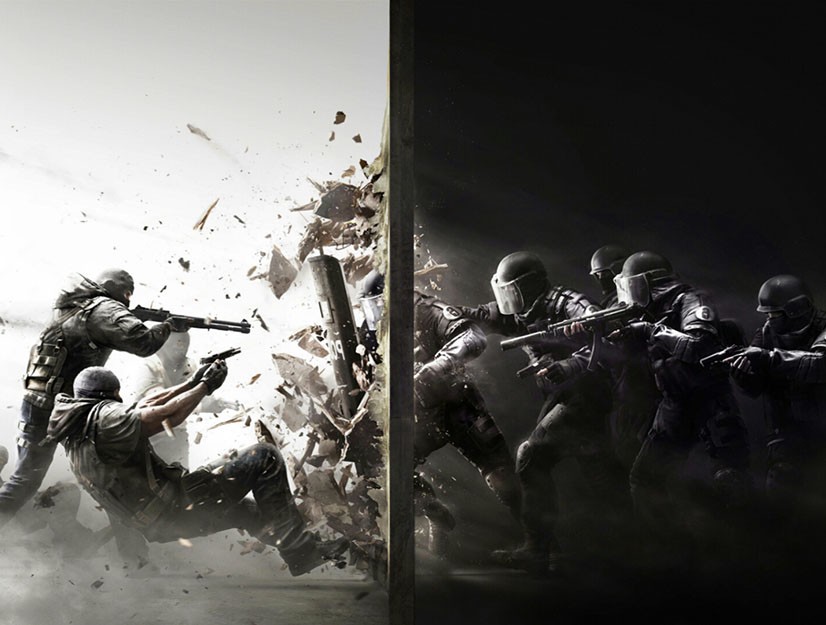
Great moments in GURsig. . . Oliver Guedon on Rainbow 6 #GamesUR
Live Test Experience on Rainbow Six Siege Olivier Guedon [youtube]https://www.youtube.com/watch?v=HsJHv6uE8gU[/youtube] In order to insure the best user experience for Rainbow Six: Siege, the Montreal User Research Lab had to re think the way they tested the game, bringing playtests and analytics to a whole new level: the live test experience. Using their knowledge and experience on the Rainbow Six Siege production, the speakers will: • Present succinctly the Rainbow Six franchise and its history • Describe user research challenges of a multiplayer focused game • Discuss the limitations of classic user tests • Introduce live tests – Closed Alpha, Closed Beta, and Open Beta o The impacts on the ...
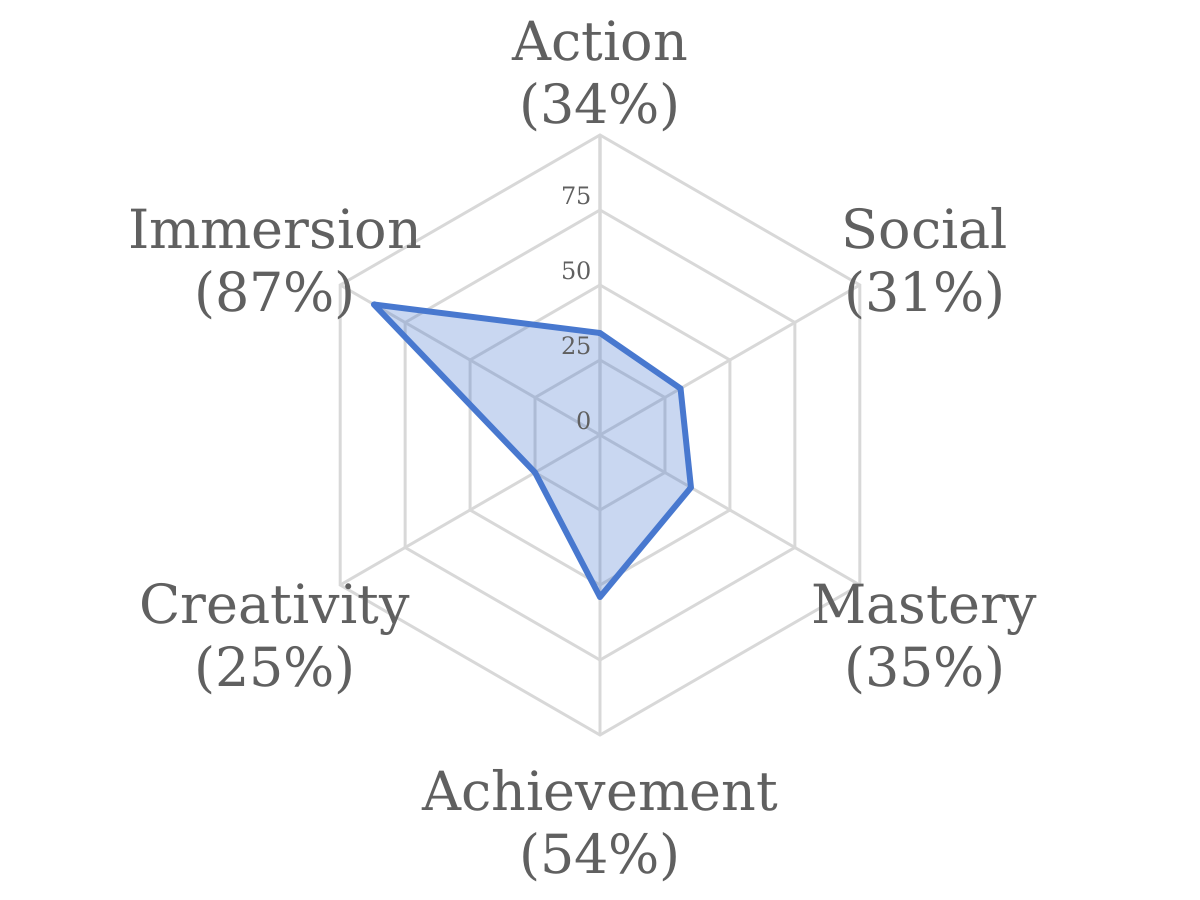
Great Moments in GURsig conf. . . Nick Yee’s talk on Player Motivation
According to Jakob Nielson, of Nielson Norman Group, Nick Yee provided the best (but very data-dense) presentation at GamesUR. Gamers are not a monolithic group; gaming preferences and motivations among gamers in important ways. Using survey data from over 140,000 gamers worldwide, we used factor analysis to develop an empirical framework of gaming motivations and a validated tool to measure those motivations. We’ll present the gaming motivations we identified, how they are related to each other and group together in 3 high-level clusters, how they vary by gender and age, and how they correlate with personality traits. This is a data-driven ...
More Featured Posts

CFP: eSports and professional game play III The purpose of this third special issue is to explore, discover and share insights and research in eSports. Authors are invited to submit manuscripts that Examine the emergence of eSports The uses of streaming technology Traditions of games that support professional players– chess, go, bridge, poker, league of legends, Dota 2, Starcraft Fan perspectives Professional... [Read more]

CFP Special Issue On: SURGE, Physics Games, and the Role of Design
CFP Special Issue On: SURGE, Physics Games, and the Role of Design Submission Due Date 5/15/2017 Guest Editors Douglas Clark, Vanderbilt University, Nashville, TN, USA Introduction The purpose of this special issue is to investigate the role of design in the efficacy of physics games in terms of what is learned, by whom, and how. Importantly, studies should move beyond basic media comparisons (e.g.,... [Read more]

CFP: Gaming, gender, and the female perspective
CFP: Gaming, gender, and the female perspective The purpose of this special issue is to investigate and explore female roles, participation, and representation in video games and the video games industry. Authors are invited to submit manuscripts that Examine the emergence and after effects of gamer gate Traditions of games that support professional female players Female fan perspectives Representation... [Read more]

Gamification Transformed: Gamification Should Deliver the Best Parts of Game Experiences, Not Just Experiences of Game Parts
Brock Dubbels Ph.D. Dept. Psychology, Neuroscience, and Behaviour McMaster University Abstract Gamification may provide new venues for offering customer experiences. The chapter compares three models of game play analyzed through user experience research. In section 1, the three models are presented: Grind Core, Freemium, and Immersion. These models are differentiated as value delivered, and user... [Read more]
CFP: eSports and professional game play II
CFP: eSports and professional game play The purpose of this second special issue is to investigate the rise of eSports. Much has happened in the area of professional gaming since the Space Invaders Championship of 1980. We have seen live Internet streaming eclipse televised eSports events, such as on the American show Starcade. Authors are invited to submit manuscripts that Examine the emergence... [Read more]


