

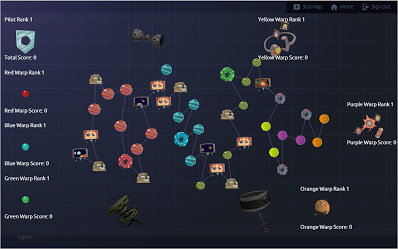

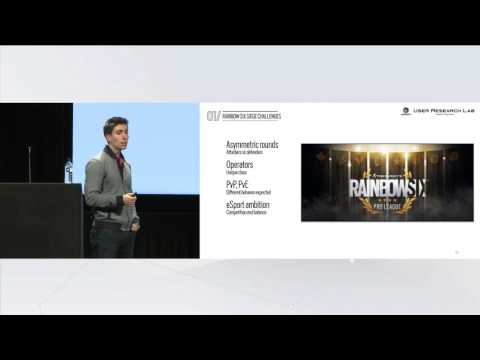
In order to insure the best user experience for Rainbow Six: Siege, the Montreal User Research Lab had to re think the way they tested the game, bringing playtests and analytics to a whole new level: the live test experience.
Using their knowledge and experience on the Rainbow Six Siege production, the speakers will:
• Present succinctly the Rainbow Six franchise and its history
• Describe user research challenges of a multiplayer focused game
• Discuss the limitations of classic user tests
• Introduce live tests – Closed Alpha, Closed Beta, and Open Beta
o The impacts on the user research, analytics, and production pipelines
o The impacts on reporting and how user research analytics helped improve the game
• Show the changes in terms of communication to all parties
• Give insights on the first months post launch, and potentially how post launch data is or can be used as live test data.
CFP: eSports and professional game play III
The purpose of this third special issue is to explore, discover and share insights and research in eSports.
Authors are invited to submit manuscripts that
- Examine the emergence of eSports
- The uses of streaming technology
- Traditions of games that support professional players– chess, go, bridge, poker, league of legends, Dota 2, Starcraft
- Fan perspectives
- Professional player perspectives
- Market analysis
- Meta-analyses of existing research on eSports
- Answer specific questions such as:
- Case studies, worked examples, empirical and phenomenological, application of psychological and humanist approaches?
- Field research
- Face to face interviewing
- Creation of user tests
- Gathering and organizing statistics
- Define Audience
- User scenarios
- Creating Personas
- Product design
- Feature writing
- Requirement writing
- Content surveys
- Graphic Arts
- Interaction design
- Information architecture
- Process flows
- Usability
- Prototype development
- Interface layout and design
- Wire frames
- Visual design
- Taxonomy and terminology creation
- Copywriting
- Working with programmers and SMEs
- Brainstorm and managing scope (requirement) creep
- Design and UX culture
Potential authors are encouraged to contact Brock Dubbels (Dubbels@mcmaster.ca) to ask about the appropriateness of their topic.
Deadline for Submission September 15, 2017.
Authors should submit their manuscripts to the submission system using the following link:
http://www.igi-global.com/authorseditors/titlesubmission/newproject.aspx
(Please note authors will need to create a member profile in order to upload a manuscript.)
Manuscripts should be submitted in APA format.
They will typically be 5000-8000 words in length.
Full submission guidelines can be found at: http://www.igi-global.com/journals/guidelines-for-submission.aspx
Mission – IJGCMS is a peer-reviewed, international journal devoted to the theoretical and empirical understanding of electronic games and computer-mediated simulations. IJGCMS publishes research articles, theoretical critiques, and book reviews related to the development and evaluation of games and computer-mediated simulations. One main goal of this peer-reviewed, international journal is to promote a deep conceptual and empirical understanding of the roles of electronic games and computer-mediated simulations across multiple disciplines. A second goal is to help build a significant bridge between research and practice on electronic gaming and simulations, supporting the work of researchers, practitioners, and policymakers.

CFP Special Issue On: SURGE, Physics Games, and the Role of Design
Submission Due Date
5/15/2017
Guest Editors
Douglas Clark, Vanderbilt University, Nashville, TN, USA
Introduction
The purpose of this special issue is to investigate the role of design in the efficacy of physics games in terms of what is learned, by whom, and how. Importantly, studies should move beyond basic media comparisons (e.g., game versus non-game) to instead focus on the role of design and specifics about players’ learning processes. Thus, invoking the terminology proposed by Richard Mayer (2011), the focus should be on value-added and cognitive consequences approaches rather than media comparison approaches. Note that a broad range of research methodologies including a full gamut of qualitative, ethnographic, and microgenetic methodologies are encouraged as well as quantitative and data-mining perspectives. Furthermore, the focal outcomes and design qualities analyzed can span the range of functional, emotional, transformational, and social value elements outlined by Almquist, Senior, and Bloch (2016).
Recommended Topics
Authors are invited to submit manuscripts that
- Focus on the role of design beyond simple medium (i.e., move beyond simple of tests of whether physics games can support learning to instead focus on how the design of the game, learning environment, and social setting influence what is learned, by whom, and how).
- Explore learning in games from the SURGE constellation of physics games and other physics games using qualitative, mixed, design-based research, quantitative, data-mining, or other methodologies.
- Focus on formal, recreational, and/or informal learning settings.
- Focus on any combination of player, student, teacher, designer, and/or any of other participants.
- Answer specific questions such as:
- How do specific approaches to integrating learning constructs from educational psychology (e.g., work examples, signaling, self-explanation) impact the efficacy of these approaches within digital physics games for learning?
- How do elements of design impact the value experienced by players in terms of the elements of functional, emotional, transformational, and social value outlined by Almquist, Senior, and Bloch (2016)?
- What is the role of the teacher in interaction with students and the design of a game in terms of learning outcomes?
- How does game design interact with gender in terms of what is learned, by whom, and how?
- How can designers balance learning goals and game-play goals to best support a diverse range of players and learners?
- How do specific sets of design features interact with players’ learning processes and game-play goals?
Submission Procedure
Potential authors are encouraged to contact Douglas Clark (clark@vanderbilt.edu) to ask about the appropriateness of their topic.
Authors should submit their manuscripts to the submission system using the link at the bottom of the call (Please note authors will need to create a member profile in order to upload a manuscript.).
Manuscripts should be submitted in APA format.
They will typically be 5000-12000 words in length.
Full submission guidelines can be found at: http://www.igi-global.com/publish/contributor-resources/before-you-write/

All submissions and inquiries should be directed to the attention of:
Douglas Clark
Guest Editor
International Journal of Gaming and Computer-Mediated Simulations (IJGCMS)
Email: clark@vanderbilt.edu

CFP: Gaming, gender, and the female perspective
The purpose of this special issue is to investigate and explore female roles, participation, and representation in video games and the video games industry.
Authors are invited to submit manuscripts that
- Examine the emergence and after effects of gamer gate
- Traditions of games that support professional female players
- Female fan perspectives
- Representation of women in games
- Market analysis
- Meta-analyses of existing research on women in games
- Female experiences of scholarship and industry
- Answer specific questions such as:
- How should feminist theory inform game user research?
- What are the methodologies for conducting feminist games research, and the uses and design of games for gender issues?
- Case studies, worked examples, empirical and phenomenological, application of psychological and humanist approaches?
- Field research
- Face to face interviewing
- Creation of user tests
- Gathering and organizing statistics
- Define Audience
- User scenarios
- Creating Personas
- Product design
- Feature writing
- Requirement writing
- Content surveys
- Graphic Arts
- Interaction design
- Information architecture
- Process flows
- Usability
- Prototype development
- Interface layout and design
- Wire frames
- Visual design
- Taxonomy and terminology creation
- Copywriting
- Working with programmers and SMEs
- Brainstorm and managing scope (requirement) creep
- Design and UX culture
Potential authors are encouraged to contact Brock R. Dubbels (Dubbels@mcmaster.ca) to ask about the appropriateness of their topic.

Digital painting of a robot getting punched in the face
Deadline for Submission June 15, 2017.
Authors should submit their manuscripts to the submission system using the following link:
http://www.igi-global.com/authorseditors/titlesubmission/newproject.aspx
(Please note authors will need to create a member profile in order to upload a manuscript.)
Manuscripts should be submitted in APA format.
They will typically be 5000-8000 words in length.
Full submission guidelines can be found at: http://www.igi-global.com/journals/guidelines-for-submission.aspx
Mission – IJGCMS is a peer-reviewed, international journal devoted to the theoretical and empirical understanding of electronic games and computer-mediated simulations. IJGCMS publishes research articles, theoretical critiques, and book reviews related to the development and evaluation of games and computer-mediated simulations. One main goal of this peer-reviewed, international journal is to promote a deep conceptual and empirical understanding of the roles of electronic games and computer-mediated simulations across multiple disciplines. A second goal is to help build a significant bridge between research and practice on electronic gaming and simulations, supporting the work of researchers, practitioners, and policymakers.

Brock Dubbels Ph.D.
Dept. Psychology, Neuroscience, and Behaviour
McMaster University
Abstract
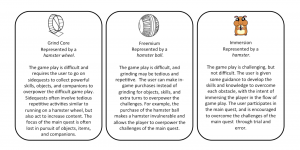
Gamification may provide new venues for offering customer experiences. The chapter compares three models of game play analyzed through user experience research. In section 1, the three models are presented: Grind Core, Freemium, and Immersion. These models are differentiated as value delivered, and user experience. Value and experience are defined across four categories: function, emotion, life change and social impact. In section 2, the role of emotion, value, and experience are described to inform how games can be transformative, providing the life change and social impact through the immersion experience model. This chapter is intended to help developers identify what kind of value experience they want to provide their customers, and provide a new view of gamification.
Three models are examined

CFP: eSports and professional game play
The purpose of this second special issue is to investigate the rise of eSports.
Much has happened in the area of professional gaming since the Space Invaders Championship of 1980. We have seen live Internet streaming eclipse televised eSports events, such as on the American show Starcade.
Authors are invited to submit manuscripts that
- Examine the emergence of eSports
- The uses of streaming technology
- Traditions of games that support professional players– chess, go, bridge, poker, league of legends, Dota 2, Starcraft
- Fan perspectives
- Professional player perspectives
- Market analysis
- Meta-analyses of existing research on eSports
- Answer specific questions such as:
- Case studies, worked examples, empirical and phenomenological, application of psychological and humanist approaches?
- Field research
- Face to face interviewing
- Creation of user tests
- Gathering and organizing statistics
- Define Audience
- User scenarios
- Creating Personas
- Product design
- Feature writing
- Requirement writing
- Content surveys
- Graphic Arts
- Interaction design
- Information architecture
- Process flows
- Usability
- Prototype development
- Interface layout and design
- Wire frames
- Visual design
- Taxonomy and terminology creation
- Copywriting
- Working with programmers and SMEs
- Brainstorm and managing scope (requirement) creep
- Design and UX culture
Potential authors are encouraged to contact Brock R. Dubbels (Dubbels@mcmaster.ca) to ask about the appropriateness of their topic.
Deadline for Submission February 15, 2017.
Authors should submit their manuscripts to the submission system using the following link:
http://www.igi-global.com/authorseditors/titlesubmission/newproject.aspx
(Please note authors will need to create a member profile in order to upload a manuscript.)
Manuscripts should be submitted in APA format.
They will typically be 5000-8000 words in length.
Full submission guidelines can be found at: http://www.igi-global.com/journals/guidelines-for-submission.aspx
Mission – IJGCMS is a peer-reviewed, international journal devoted to the theoretical and empirical understanding of electronic games and computer-mediated simulations. IJGCMS publishes research articles, theoretical critiques, and book reviews related to the development and evaluation of games and computer-mediated simulations. One main goal of this peer-reviewed, international journal is to promote a deep conceptual and empirical understanding of the roles of electronic games and computer-mediated simulations across multiple disciplines. A second goal is to help build a significant bridge between research and practice on electronic gaming and simulations, supporting the work of researchers, practitioners, and policymakers.
Good research is about knowing which questions to ask, when to ask them, and how to answer them.
In this presentation, Brock Dubbels, UXPA-MN board member and from Senior Omnichannel Rsearcher at American Family Insurance will present on the role of UX research when framing up your apps and webpages to reduce the unknowns and build a solid foundation of data to build the right experience in the the most effective way.
You will learn about generative, formative and summative assessments and methods for data collection and the creation of a style guide.
The presenter will present a case study on how UX research was gathered to inform the style guide for a customer facing insurance company website for desktop and their mobile site.
Speaker:
 Brock Dubbels, Phd has over 15 years of experience in User Research with usability testing, user-centered design, and customer experience principles. He Is currently an Senior UX Researcher at American Family Insurance.
Schedule:
6:30 pm to 7:00 pm – Networking with Food & Beverages
7:00 pm to 8:00 pm – Presentation, Q&A
Sponsor and Location:

Celarity, Southtown Office Park, 8120 Penn Ave S., Bloomington, MN 5543, First Floor Conf. Room 135 & 145

Sign up at UXPA-MN — link
The creation of a scientific article can prepare you for expert consumption of science, and even the expert peer review of science. Participate in this hands-on workshop. Learn the tricks of the trade. Learn the difference between a literature for a class paper as compared to a literature review for publication. Learn the role of the annotated review for the creation of methods, variables, and analysis know as a nomological network. This network would include the theoretical framework for what you are trying to measure, an empirical framework for how you are going to measure it, and specification of the linkages among and between these two frameworks. Join this workshop, play the game, and learn annotated literature for publication and peer reviewed editorial work.
What is in an article?
- What are the structural elements of a scientific article?
- How do you read a scientific article?
In reviewing an article for operationalizing, what should you do?
- Summary/Abstract/ Key words
- Problem statement
- Literature review
- Methods
- Analysis
- Outcomes
- Discussion
Summary/ Abstract/ Key words
- Note the highlights in the summary/ abstract
- Do the key words in the summary align? What is missing? Is there jargon? Do the words seem to align with your knowledge and experience?
Problem statement
- Is the problem statement clear, concise and jargon free?
- Does the literature review provide a focused review to lead into and support the research questions and methods?
- Review the ideas
Literature review
- Check the citations and sources
- Does the article provide a foundation towards describing work in service to the problem statement?
- Is the article is a citation dump: that there so many citations, that there is a lack of focus?
- Are the articles summarized to provide support to extend a question/ investigation?
- Is the review well-organized?
- Do they provide a table?
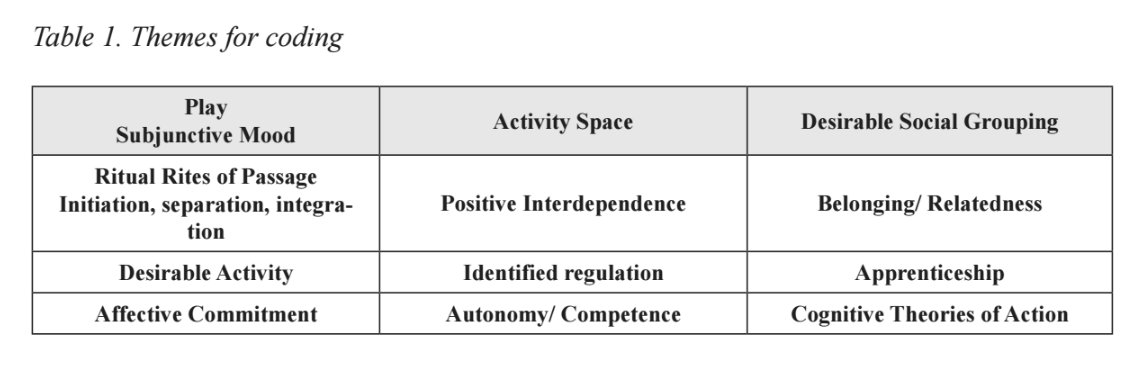
- Are the articles summarized with a clear link to the target variables, sampling, data collection, and analysis method?
Methods
- How do the methods support the research question / hypothesis test?
- Are the methods capable of answering the question?
- Are there gaps in the methods?
- What are the key assumptions in these methodological approaches?
- Do you have a good example of what these different methodological approaches should include?
- Are they using grounded theory, are they using a parametric test, are they offering effect sizes, are they using trim and fill (meta analysis).
- What are the requirements/expectations for the method?
Analysis
- Does the analysis methods answer the question being asked?
- Is the necessary information present to verify the analysis?
- Does the analysis have the correct formatting based upon the analysis testing?
- Are tables, figures and data presented according to APA?
Outcomes
- Are the outcomes/ interpretations supported by the data?
- Do the outcomes answer the research question?
Discussion
- Does the discussion offer
- Insight?
- Limitations?
- Next steps?
Example Method
- Have highlighter, pen, and paper
- Take them out of your hands, and place them on the table
- Simply give it a quick read for gist, and overall feel.
- Now pick up the pen, highlighter, and paper.
- This is where begin to annotate the article for my citation software/ peer review,
- Read for logic and flow
- operationalizing research questions and variables.
- What are my thoughts on each section?
- What is the thesis of each paragraph?
- I write down my gist feeling and examine this feeling with reasoning.
- Look for evidence for and against my feeling about how the parts serve the whole
- Research / annotated lit review
- What is my overall thought as a potential reader of the journal?
- How does this relate to the questions in my study?
- Imagine the author as a hardworking person that cares alot about what they wrote
- Have the authors done well?
- If the author/s have done a good job, I commend them — do this early, and maintain a positive tone
- do not attack or insult the author
- If they have not done well, I suggest the major issues that might be improved with a suggestion for how to do it, and perhaps where to look.
Use the online scoring system, and provide summaries of reasoning/evidence
- Use page numbers quotes, suggest examples, new ideas, and resources.
- I combine my notes based upon each of the online scoring system scores.
- I examine the relationship between the literature review, methods, analysis, and outcomes as an overall evaluation – is it good, it needs revision, the paper needs major revision, the paper needs to be resubmitted.
- I transfer those notes into the submission system with the message to the author/s, including general suggestion for fit in the journal, and helpful suggestions for next steps.
- I review my analysis for tone.
–Is what I am saying helpful?
- I am not the gatekeeper, my role is to encourage, and help people get better
- I try to use empathy, build community, and be inclusive
Reviewer specific issue:
- does the article meet the aims and scope of the journal?
Scope and Aims
- To promote a deep conceptual and empirical understanding of the roles of electronic games and computer-mediated simulations across multiple disciplines.
- To help build a significant bridge between research and practice on electronic gaming and simulations, supporting the work of researchers, practitioners, and policymakers.
Audience appeal
- Scientific papers typically have two audiences:
- Journal readers themselves, who may be more or less knowledgeable about the topic addressed in the pape
- Referees, who help the journal editor decide whether a paper is suitable for publication
- Your mom or dad, or spouse –if they doing this, you probably don’t deserve them


The Evolution of Insights at Riot Games
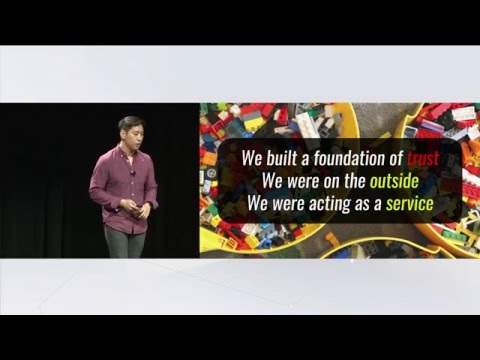
Brandon discusses the embedded model of Riot Games research, including some of the evolutionary steps, such as the Center of Excellence Model. Riot’s Insights team has grown from a disparate collection of 23 Rioters spread across small service teams, to a 70+ Rioters unified within an Insights discipline that’s involved in all aspects of product development.
Brandon Hsiung
Bio:Brandon Hsiung leads the Insights Discipline at Riot Games, the studio behind League of 
Legends.Insights is a 70+ Rioter team with the mission of wrestling large amounts of information and translating user experiences into actionable insight and machine-driven product experiences. Insights uses a wide variety of tools across Analytics, Data Science, Strategy and Research to solve problems and develop products for everything from Game Design to Organizational Design. Prior to seeing the gaming light and working at Riot, Brandon was lost for 8 years in the wilderness of strategy consulting and financial services.
Join us at the next GURsig, submit a talk!
Game User Research Summit 2017 call for papers
Learn more about Game User Research Special interest Group (GURsig):
About the Game User Research sig at IGDA
Jakob Nielson says:
The Games User Research Summit was a great conference
Live Test Experience on Rainbow Six Siege
Olivier Guedon

Olivier Guédon is a Game Intelligence Analyst with Ubisoft’s Montreal User Research Lab. His experience in the video game industry started at Ubisoft Montreal in 2007 in information risk managementfor the production teams of brands like Assassin’s Creed or Far Cry. He went to risk analytics to come back to Ubisoft at the User Research Lab in 2014 to lead the analytics efforts for the Rainbow Six Siege production.
Join us at the next GURsig, submit a talk!
Game User Research Summit 2017 call for papers
Learn more about Game User Research Special interest Group (GURsig):
About the Game User Research sig at IGDA
Jakob Nielson says:
The Games User Research Summit was a great conference
with many insightful talks by top professionals.
According to Jakob Nielson, of Nielson Norman Group, Nick Yee provided the best (but very data-dense) presentation at GamesUR.
Gamers are not a monolithic group; gaming preferences and motivations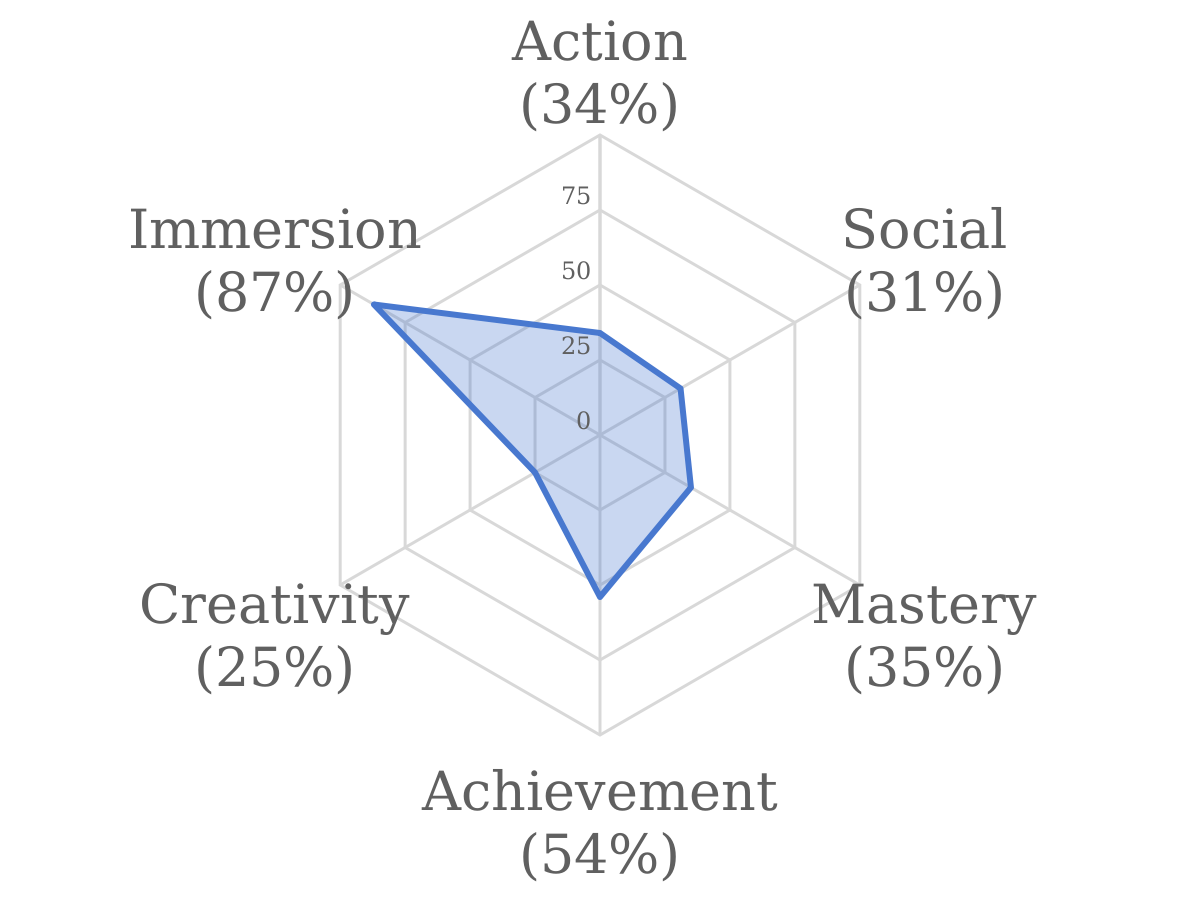 among gamers in important ways. Using survey data from over 140,000 gamers worldwide, we used factor analysis to develop an empirical framework of gaming motivations and a validated tool to measure those motivations. We’ll present the gaming motivations we identified, how they are related to each other and group together in 3 high-level clusters, how they vary by gender and age, and how they correlate with personality traits. This is a data-driven talk where we focus on the surprising findings that emerged from the large data set.
Watch the the GURsig presentation by Nick Yee:

Join us at the next GURsig, submit a talk!
Game User Research Summit 2017 call for papers
Learn more about Game User Research Special interest Group (GURsig):
About the Game User Research sig at IGDA
Jakob Nielson says:
The Games User Research Summit was a great conference
with many insightful talks by top professionals.
Nick Yee is the co-founder and analytics lead of Quantic Foundry. For over a decade, he has conducted research on the psychology of gaming and virtual worlds using a wide variety of methods. At Stanford University, he used immersive virtual reality to explore how avatars can change the way people think and behave. At the Palo Alto Research Center (PARC), he applied social network analysis and predictive analytics to examine large-scale World of Warcraft data. He was also a senior research scientist in Ubisoft’s Gamer Behavior Research group. He is the author of “The Proteus Paradox”.